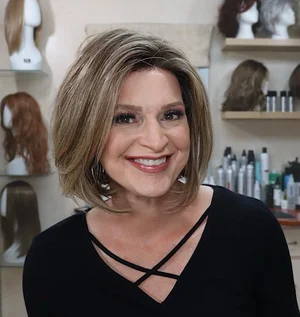
How to Become a Wig Specialist as a Hairstylist
If you’ve been behind the chair for a while, you’ve probably felt it.
The physical strain. The packed schedule. The sense that you’re working harder every year, but not necessarily building something new.
At the same time, more clients are dealing with hair loss, thinning, or medical changes, and they’re not finding real support in traditional salons.
This is where becoming a wig specialist as a hairstylist comes in.
Not as a trend, but as a real evolution of your career.
Why Wigs Are Growing (And Why It Matters for Hairstylists)
Wigs and toppers are no longer a last resort.
They’ve become a solution for:
thinning hair and aging
medical hair loss (chemo, alopecia, autoimmune conditions)
postpartum shedding
clients who want fuller hair or a color change without constant chemical services
At the same time, today’s ready-to-wear wigs look dramatically more natural than they did even 10 years ago.
Clients are more open than ever. But here’s the gap:
Most hairstylists were never trained to help them.
Wig training for hairstylists has been difficult to find and to incorporate into a stylist’s already busy schedule.
So clients end up:
ordering online with no guidance
feeling overwhelmed by choices
wearing pieces that don’t fit or flatter
There is a real opportunity here for stylists who choose to specialize.
What a Wig Specialist Actually Does
A wig specialist is not just someone who “knows wigs.”
In this model, it looks like this:
Retail-focused. You guide clients in choosing and purchasing the right wig or topper
Low-install approach. No glue, no braiding, no complicated installs
Medical hair loss support. You understand the emotional side, not just the technical
Luxury fitting experience. You help clients find something that feels natural and effortless
This is very different from high-maintenance install-based wig work.
And for many stylists, it’s far more sustainable.
Skills You Need to Become a Wig Specialist
You don’t need to start over. You need to shift how you use what you already know.
Key skills include:
Consultation skills
Cutting and customization
Color matching
Fit and adjustment
Client communication
If you’re already an experienced hairstylist, you’re not starting from zero.
You’re refining your skillset in a new direction.
You can choose to refine your clientele by letting go of the ones that drain you, to make room for the ones that need you - and that give you the gratitude and respect the energy vampires don’t.
Wig Training Options for Hairstylists
There are several ways stylists try to learn wigs. Not all of them lead to confidence or consistency.
YouTube and Self-Taught
This is where many people start.
It’s surprisingly time-consuming, requiring hours of searching, watching, and second-guessing just to piece together basic understanding.
It’s scattered and often shaped by influencer-style content, uneven teaching quality, and opinions that don’t translate well to everyday clients.
It can give you exposure, but it doesn’t give you a clear path forward.
Brand Classes
Brands like Jon Renau, HairUWear, and René of Paris offer education on their products.
These can help you understand:
specific collections
basic features and handling
a limited set of styling skills
But they’re focused on their lines, not on building a full client experience or creating a wig business from the ground up.
In-Salon Mentoring
Learning from another stylist can be helpful, but it’s often:
inconsistent
dependent on their experience
lacking structure
Professional Wig Training Programs
This is where things start to come together.
Wig Essentials for the Hairstylisthelps you:
understand core wig and topper concepts
begin working with clients confidently
integrate wigs & toppers into your current services
The Ultimate Wig Stylist Bootcamp goes deeper into:
consultation systems
retail strategy
pricing and service structure
building a sustainable wig-focused business
If you’re serious about becoming a wig specialist, structured training shortens the learning curve significantly.
Common Mistakes When Becoming a Wig Specialist
Most stylists don’t struggle because they lack ability.
They struggle because they approach wigs the same way they approach traditional services.
Overcomplicating the Process
Jumping straight into glue and installs.
For most clients, this isn’t necessary.
Ignoring the Retail Side
The real value is in helping clients choose and purchase the right piece.
Without that, the model doesn’t work.
Underpricing Wig Services
You’re providing expertise, guidance, and a completely different outcome for the client, not just cutting hair.
Avoiding the Conversation
Clients are already thinking about wigs.
They’re just waiting for someone they trust to guide them.
The Business Opportunity for Hairstylists
This is where things shift.
Becoming a wig specialist isn’t just about adding a service.
It’s about changing how you earn.
How stylists bring wigs into their business can look different depending on their setup and goals. Some start right at their existing chair as booth renters, offering wig consultations, customization, and private ordering for a select group of clients. Others work within a multi-stylist salon but carve out a quieter private room or separate area for wig fittings and hair loss appointments. And some build a complete wig studio model, where wigs, toppers, consultations, retail, and follow-up services become a defined specialty inside their business. It doesn’t have to be all-or-nothing from the start. Many stylists begin small, then grow into a bigger wig-focused model over time.
You can:
reduce physically demanding services
increase revenue per client
create more flexibility in your schedule
build a niche that sets you apart
Very few stylists are trained in this area.
That alone creates opportunity.
I’m contacted regularly by women all over the country asking if I know of a trained wig stylist in their area.
That’s proof of the need.
Professional Wig Training Programs
If you’re ready to explore this path further, the right training matters.
A strong foundation changes everything.
Wig Essentials for the Hairstylist is a starting point for building confidence and understanding.
The Ultimate Wig Stylist Bootcamp is designed for stylists who want a complete system, including the business side of wigs. It’s an on-demand wig training for hairstylists based on what’s working in successful wig studios today.
If you want to learn more about how these programs work, you can explore the details here:
👉 Wig Essentials for the Hairstylist
👉 The Ultimate Wig Stylist Bootcamp
Is Becoming a Wig Specialist Right for You?
If you’re feeling burned out behind the chair, or ready to evolve your career, this is a path worth exploring.
You don’t have to leave the industry.
You can expand within it.
Becoming a wig specialist allows you to use what you already know in a way that can be more sustainable, more impactful, and more aligned with where the industry is going.
If you’re curious, take a closer look at the training options and see what fits your next step.
Making Space in Your Book for Wig Clients
If you’re wondering how to make room for wig clients without blowing up your existing schedule, there is a systematic way to do it:
Sherry Schaefer is the founder of My Wig Coach, where she provides wig training for hairstylists through programs such as The Ultimate Wig Stylist Bootcamp and Wig Essentials for the Hairstylist.